It’s Not the Loo, It’s the Line: A Marine Toilet Service Plan for UK Boats
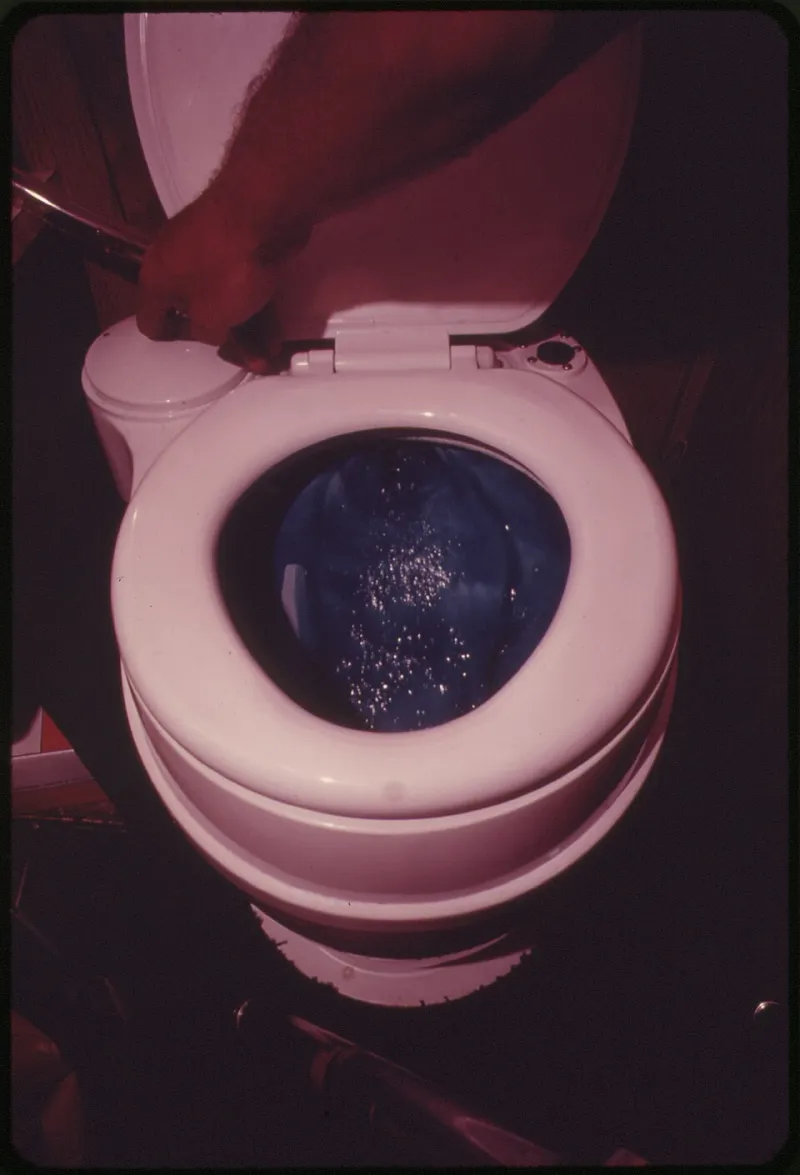
Photo: Bill Kuykendall, Public domain, via Wikimedia Commons
There are few more reliable conversation-starters on a UK pontoon than the words ‘the head smells’. It can be a faint whiff in the locker, a proper eye-watering greeting when you lift the lid, or that mysterious pong that appears only when the boat has been shut up for a week. The temptation is to blame the toilet itself and start pricing up a shiny replacement. Resist that urge. On most British boats, the head is doing its best. The problem is usually in the plumbing around it.
A marine toilet is a simple beast: pump, valves, pipework and a bowl. It is also asked to deal with seawater, hard water, urine scale, paper and the occasional bit of crew-related optimism. Over a season or three, all of that leaves a deposit. In 2026, with chandlery prices what they are, a service kit and a patient hour are far better value than a new loo. Here’s how to find the smell, fix the likely cause and keep the whole arrangement sweeter.
Start with your nose, not the toolbox
Before you buy anything, work out where the smell actually lives. Open the locker and sniff the hose run. Check around the base of the toilet, the outlet elbow and any vented loop. Is the bowl itself whiffy, or does the pong hit you when you open a locker door? Does it get worse after pumping? Does it smell like eggs, drains or a stagnant bucket?
That sniff test matters. A bowl that smells after flushing points towards scale or a joker valve. A locker that smells of old socks often means permeated hose. A gurgling flush and a faint drain smell can mean the vented loop or anti-siphon valve needs attention. And if the smell is only in the heads compartment after the boat has been closed up, ventilation and a damp bilge may be part of the picture too. Don’t mask it with bleach and hope. Bleach is hard on rubber parts and tells you nothing.
The joker valve is the usual suspect
The joker valve sits in the outlet elbow and is the marine toilet equivalent of a one-way door. It lets waste out and should stop it creeping back. When it weakens, splits or gets furred up with scale, you get backflow, a slow pump and that distinctive smell sitting in the bowl. It is cheap, small and easy to carry as a spare. It is also neglected because you cannot see it working.
If your head has a service kit listed for it, buy the kit rather than just the valve — springs, seals and gaskets age together. Before fitting, clean the sealing face properly. A new joker valve seated on a crusty elbow will not seal. Check for hair, paper and scale in the elbow while you are in there. Do not overtighten the screws or clips; distorted rubber is no better than worn rubber. A joker valve is a routine consumable, not a lifetime component. Treat it like an impeller and replace it before it tells you it has retired.
Scale: the quiet tax on hard water and urine
UK water can be hard, and urine scale is harder still. That pale crust in the bowl and the discharge pipe restricts flow, gives bacteria somewhere to live and turns a simple pump into a workout. If the flush is sluggish and the bowl stains quickly, descaling is overdue. Use a proprietary marine toilet descaler or a diluted white vinegar soak, following the maker’s instructions. Do not mix chemicals, and do not leave strong acid sitting on rubber seals for longer than necessary.
For boats on freshwater moorings, flush through with fresh water before laying up. For sea toilets, a freshwater flush before a long pause is a small kindness that pays back handsomely. If the bowl is heavily scaled, remove it if practical and soak it, but keep the chemicals away from alloy fittings and anything you are not sure about. A soft brush and patience beat a chisel.
Hoses: replace before they perfume the lockers
Sanitary hose is not the place to save a tenner. Clear PVC garden hose may look fine for a season, but it permeates, kinks and eventually gives the whole boat a distinctive aroma that no amount of citrus spray will cure. If you can clean the outside of a hose and it still smells, the smell is coming through the wall. Replace it with proper marine sanitary hose, sized correctly, with gentle bends and proper support.
Use stainless clips, ideally double-clipped below the waterline, and check every connection you can reach. A hose that kinks can starve the pump; a hose that loops and sags can hold waste. Measure twice, warm the hose if needed, and avoid sharp bends that put strain on the spigots. This is also the moment to check seacocks and inlet strainers. A blocked inlet makes the pump work harder and can leave seawater sitting where it should not.
Vented loops and anti-siphon valves
The vented loop is there to stop seawater siphoning back into the bowl. When its little valve clogs with salt or scale, you can get slow flushing, odd smells and a genuine safety issue. Check that the loop is mounted above the waterline at the correct angle, that the vent is clear and that the valve is functioning. Replace the duckbill or valve as specified rather than improvising with sealant.
This is not a place for ‘that’ll do’. A vented loop that is blocked or wrongly routed can let water in when you least want it. If the plumbing has been altered by a previous owner, trace it properly or get someone who knows these systems to look at it. It is boring, hidden work — and exactly the sort of thing that separates a sweet-smelling boat from a running joke on the pontoon.
Spares worth their locker space
You do not need a whole chandlery aisle. A sensible UK spares box for the head includes a joker valve, the correct service kit for your model, a couple of stainless hose clips, silicone grease, disposable gloves, a small tub of descaler and an old towel that you are willing to sacrifice. A spare pump diaphragm or complete pump assembly is worth considering if your model is older and parts are getting scarce.
Record the make and model of your toilet. Photograph the outlet elbow before you take it apart. Chandlers can usually match service kits if you have the numbers, and a five-minute photo saves a lot of guesswork. If you are cruising, carry the joker valve at minimum. It is the sort of small part that ruins a weekend when it fails on a Sunday afternoon.
A simple seasonal routine
At the start of the season, flush with fresh water, descale, inspect the joker valve, check hose clips and exercise the pump. During the season, pump properly rather than half-heartedly, keep the bowl clean and deal with slow flushing before it becomes a blockage. At lay-up, pump out holding tanks, flush the system with fresh water, drain what the maker says to drain and follow their winterising advice. Do not leave waste sitting in the system for months and expect spring to be fragrant.
If the bowl is cracked, the pump body is split or the whole thing is an obsolete museum piece, replacement may be the honest answer. But most heads are replaced too early. Start with the joker valve, the scale and the hoses. Nine times out of ten, the toilet was never the problem — the line was.