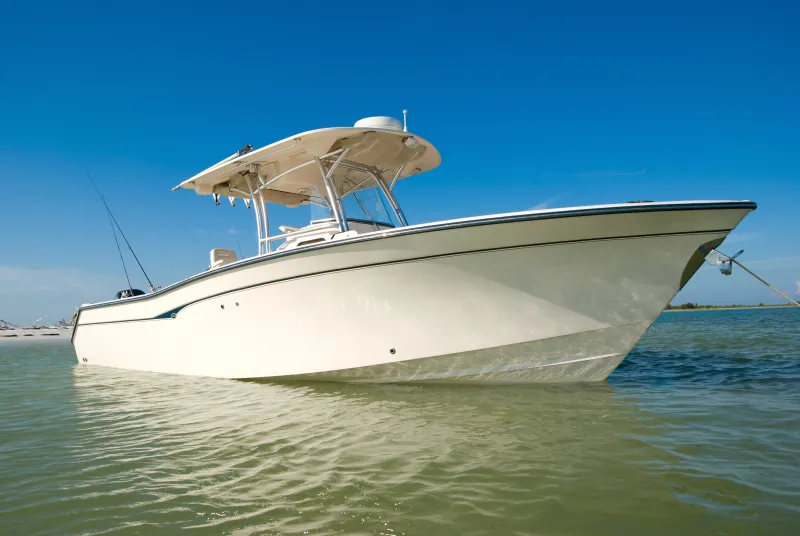
The Cockpit Locker Diet: Shedding the 'Just in Case' Ballast
Photo: Internet Archive Book Images, No restrictions, via Wikimedia Commons
Every cockpit locker tells a story. Usually it is a story about a boater who once thought a spare alternator belt, three fenders, a rusty anchor and a packet of out-of-date flare cartridges would solve a problem at sea. The locker is not lying to you exactly. It is just holding up a mirror to your optimism. For UK day sails and weekend runs, that mirror needs a hard polish.
A cockpit locker is not a garage. It is a working space on a moving platform, often wet, sometimes awash and always smaller than it looks when empty. The gear inside has three jobs: keep you safe, keep the boat moving and keep the crew comfortable enough to want to come back. Anything that does none of those jobs is ballast with a receipt.
The locker as a confession booth
Empty the locker onto the pontoon or into a cockpit that you have covered with a tarpaulin. Be honest. That bag of mystery cables? You have not identified it since you bought the boat. The half-used tube of sealant? It went off two seasons ago. The folding deck chair? It fits nobody comfortably and blocks the drain.
British boating makes hoarding easy. We sail in weather that can switch from soft drizzle to proper grey washing machine in an hour, so we keep spare layers. We moor in tidal waters, so we keep spare lines. We sail short-handed, so we keep spares of things we might need to fix one-handed. All sensible. But sensible becomes silly when the locker is so full that you cannot find the bilge pump handle.
Weigh the stuff, then weigh the consequences
Weight in the ends of a boat is not neutral. A cockpit locker full of tools, anchors and bottles of antifreeze can affect trim, steering and how the boat feels in a chop. It also makes the locker lid harder to open one-handed and turns a simple search into an archaeological dig. Keep heavy items low and central where you can, and do not treat the aft locker as a skip.
Access is the other cost. If you need a torch, a knife or a spare shackle in a hurry, it should not be under three fenders and a bag of charcoal. Short-handed sailing punishes bad stowage. One hand for the boat, one for the kit — that is the rule. If opening the locker requires two hands, a knee and a prayer, the layout is wrong.
The ruthless keep-or-go list
Keep: two good mooring lines, a set of fenders appropriate to your berth, a sturdy bucket, a manual bilge pump handle if your pump needs one, a waterproof torch, a knife, a basic first-aid kit, a fire extinguisher or fire blanket in a known accessible place, sail ties, a few spare shackles, a winch handle, a tide table or a charged phone with a backup, and a hand-bearing compass if you navigate on paper. Add a spare warm layer and dry gloves in a dry bag for British weather.
Go: old flares — dispose of them properly, do not store them as souvenirs. Out-of-date food, half-empty lubricants, unidentified cables, broken tools, bent shackles, ropes with chafe or glazing, fenders with split seams, and the 'just in case' anchor that does not fit your bow roller. Go also for multiple chargers for phones you no longer own, camping gear that lives aboard but never gets used, and anything that rattles, leaks or smells of old petrol.
Question mark: spare impellers, filters and belts are worth keeping if they match your engine and are stored dry and labelled. A second anchor is useful if it is the right type and you have a plan for it; otherwise it is a heavy guilt object. Tools are good, but a random tin of rusty spanners is not a toolkit. Keep a small, functional set and move the rest to the workshop.
Access: twenty seconds versus twenty minutes
Sort kit by how quickly you might need it. The grab zone is whatever you can reach from the companionway or helm without climbing into the locker. This is where the torch, knife, VHF, sail ties and a basic spares pouch live. The weekly zone holds fenders, mooring lines and the bucket. The deep zone is for the anchor, spare warps, engine spares and the toolkit you use at the dock, not mid-tack.
Use dry bags and mesh bags so you can pull out a whole category rather than excavating. Label them with a marker. A clear plastic box for shackles and split pins is fine if it is secured; loose metal in a locker becomes a projectile when the boat heels. Cargo nets and lidded boxes help, but do not overpack them. The aim is a locker you can open, inspect and close without swearing.
A three-zone stowage plan for real boats
Zone one, the everyday cockpit kit: a small dry bag with torch, knife, spare shackles, sail ties and a lightweight windproof. Hang it or wedge it near the hatch. Zone two, the weather and tide kit: waterproofs, warm layers, dry gloves, a thermos if you are that sort of crew, and a paper tide table in a waterproof sleeve. Zone three, the deep store: spare lines, fenders, bucket, engine spares, tools and the anchor if it lives there. Keep the drain clear and check the locker seal and hinges. A locker that fills with water will turn a dry bag into a swimming pool.
Do not store petrol, gas or solvent in a cockpit locker unless it is a properly ventilated and drained gas locker designed for the job. Do not jam the lid shut with kit. Do not store flares where they can roll about and knock against metal. And do not put the first-aid kit under the anchor chain.
What British weather and short-handed sailing demand
The UK forecast is a suggestion, not a contract. A day sail on the Solent can start in sunshine and finish in a cold beat home with spray coming over the bow. Keep a spare warm layer and dry gloves where you can reach them. Keep a torch handy for the early dusk and a knife for the inevitable rope around the prop. Keep the tide table where you can find it without unpacking the locker.
Short-handed, simplicity wins. One good mooring line is better than four mystery lines. Four fenders that fit your berth are better than eight that deflate. A small toolkit you understand is better than a heavy box of maybes. If you cannot reach it, lift it and use it in one movement, rethink it.
The Sunday clear-out routine
Once a month, open the locker and take out anything that has migrated in. Once a season, empty it completely, rinse the inside, check the drain and inspect the hinges. Repack with the trip in mind: day sail, weekend run or longer passage. If you have not used something for two seasons and it is not safety-critical, ask yourself why it is still aboard. The answer is usually 'because it was expensive once'. That is not a stowage plan.
A good cockpit locker is not a museum of might-be-useful. It is a working cupboard for a boat that actually goes sailing. Keep it light, keep it accessible and keep it honest. The sea will provide enough surprises without your locker adding to the list.