Stainless Isn't Magic: A UK Boater's Practical Guide to Rust, Anodes and Stray Current

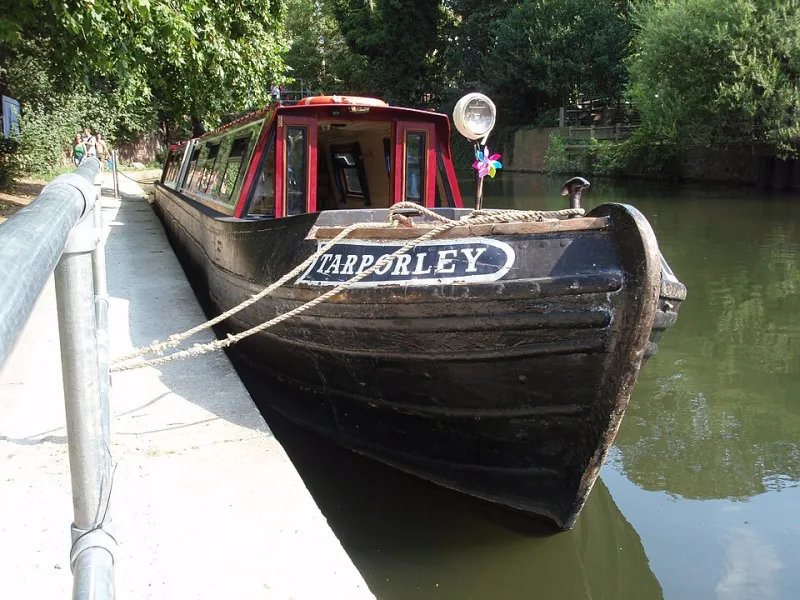
Photo: Nauticalite, CC BY-SA 4.0, via Wikimedia Commons
Corrosion on a UK boat rarely arrives with a dramatic crack. It shows up as a brown weep under a stanchion base, a chalky white crust on a through-hull, or an anode that has quietly vanished between Easter and August. The annoying part is that most of it is preventable — or at least catchable — with a torch, a notebook and a bit of healthy suspicion.
Stainless steel is not a force field
Stainless relies on a passive chromium-oxide layer. Scratch it, starve it of oxygen, or expose it to chlorides and that layer can break down. In UK waters you are dealing with varying chloride loads: proper salt on the coast, brackish soup in estuaries, and mostly freshwater on the canals, though road salt, cleaning chemicals and marina mains can still cause trouble.
The grade question matters. 304 is the common workshop stainless: fine for many inland fittings, cabin hardware and protected applications, but it is more prone to pitting in coastal chloride conditions. 316 — often sold as A4 or 'marine grade' — adds molybdenum, which improves resistance to pitting and crevice corrosion. It is not invincible, but for deck fittings, chainplates, stanchions, pulpit bases and anything regularly washed by salt, 316 is the sensible default.
The trap is that 'marine' is a marketing word, not a metallurgical guarantee. Ask for the grade, look for stamps, and be wary of cheap fittings with no specification. A 316 cleat at a sensible chandlery price is usually better value than a mystery-metal bargain that starts weeping in its first season.
Anodes: sacrificial, not ornamental
Anodes work by being less noble than the metal they protect. In simple terms, they corrode so your propeller, shaft, rudder or hull fitting does not. But the right anode depends on the water. Zinc is traditional for saltwater. Aluminium alloys are common for brackish and mixed conditions. Magnesium is generally for freshwater. Using the wrong one can mean it fizzes away too fast — or sits there doing almost nothing.
Check anodes at lay-up and again mid-season. A working anode erodes evenly and may look pitted or chalky. An anode that is still pristine after a salty season is suspicious: it may be painted over, badly bonded, or simply the wrong alloy. Clean mounting faces, use new fasteners, and make sure the anode is in good electrical contact with the metal it protects. Do not coat the contact face in paint or grease.
Do not over-anode as a reflex. Extra anodes can overprotect certain metals and cause problems elsewhere, especially with aluminium outdrives and mixed-metal assemblies. If anodes are disappearing fast, find out why before buying a bigger box of them.
The marina mains trap
Shore power brings comfort and a whole new corrosion route. Stray current and galvanic corrosion can nibble at underwater metals, and the symptoms are easy to miss: zincs that vanish faster than your neighbour's, pinkish copper alloy, green crust around fittings, or paint blistering below the waterline.
A galvanic isolator or isolation transformer helps break the shore-earth path, but it is not a licence to ignore faulty marina wiring. If you suspect a problem, get a qualified marine electrician to test the boat and the supply. Do not start randomly disconnecting earths or adding anodes as a cure.
Simple checks help: keep a note of anode loss each month, look for fizzing or bubbles around underwater metals when the shore power is on, and compare your boat with nearby vessels. If several boats on the same pontoon are eating anodes, the conversation needs to include the marina, not just your chandlery list.
Checks before the chandlery bill
Walk the boat with a torch and phone camera. Look under stanchion bases, around chainplates, at through-hull fittings, seacocks, rudder stocks, engine anodes and any stainless fastener sitting in aluminium or timber. Brown staining, white powder, green crust, pitting or a rusty weep are all clues.
Rinse salt off regularly, especially after a blowy coastal passage. Use fresh water and a soft brush. Avoid wire wool on stainless — it can leave iron particles that rust and stain. If you are cleaning up fittings, use a non-scratch pad and a stainless-safe cleaner. Keep fasteners lubricated with a marine-grade anti-seize or bedding compound where appropriate, and replace chewed screws before they become a seized mess.
Take photos each season. It sounds fussy, but a photo of a clean anode in April and a half-eaten one in July tells you more than memory. If you are buying replacements, spend where the metal lives in salt: 316 for deck hardware, correct anodes for the water you actually boat in, and a decent galvanic isolator if you use shore power. The rest can wait.
The practical shopping list
For a UK boat, a sensible corrosion kit is not huge: a torch, a soft brush, fresh-water rinse, stainless-safe cleaner, a small tube of anti-seize, correct anodes for your water type, new anode fasteners, and a notebook or phone album for records. If you are coastal and use mains power, budget for a galvanic isolator or isolation transformer and a professional check.
The point is not to panic about every brown mark. It is to know which brown mark matters. Stainless is good stuff; it is just not magic. Anodes are cheap insurance; they are just not a substitute for finding the fault. And the best corrosion check is the one you do before the chandlery bill arrives.