Press to Talk, Not to Panic: A Pontoon-Side VHF Confidence Drill
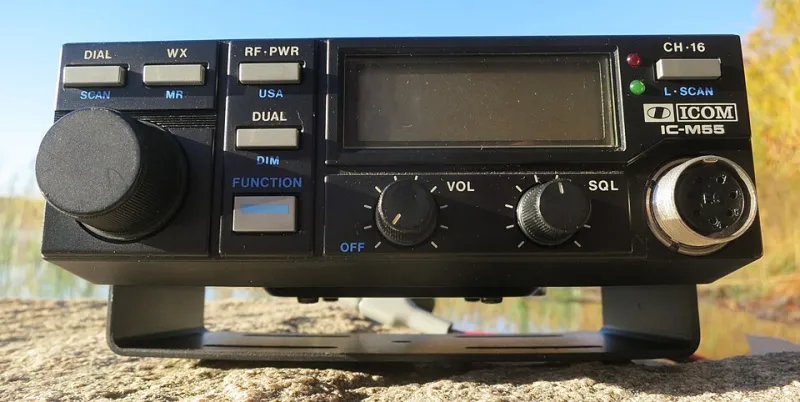
Photo: R. Henrik Nilsson, CC BY 4.0, via Wikimedia Commons
There is a special kind of silence aboard a boat when you key the mic and nothing useful comes back. Not the peaceful silence of a quiet anchorage — the other sort. The one where you realise the radio you have glanced at all season has never actually been asked to do anything except look reassuring.
A VHF is not a magic box. It is a power supply, a set, a length of coax, an aerial and a licence, all pretending to be one simple thing. The good news is that fifteen minutes on the pontoon, before the season gets busy, will tell you far more than a panicked button-press in a squall. Here is a sensible little drill — salty enough to be useful, calm enough to do in a marina without attracting an audience.
Start with the boring bits: power and the set itself
Before you go hunting for antenna gremlins, check the obvious. Is the set getting clean 12V? Look at the fuse, the terminals and the back of the radio. A little green corrosion on a spade connector can turn a perfectly good radio into an expensive clock. Check that the display is bright, the channel knob clicks positively and the squelch actually shuts out the background hiss rather than leaving a permanent bacon-frying soundtrack.
If you have a DSC set, make sure the MMSI number is showing where it should and that any GPS input is alive. Do not, under any circumstances, press the red distress button to see what happens. That is not a test. That is a very efficient way to start a conversation with HM Coastguard that you would rather not have.
Give the handset and curly cord a look as well. Cracked rubber, a stiff cord or a push-to-talk button that feels mushy are all cheap warnings. Deal with them at the chandlery counter, not mid-channel.
The aerial is where silence is born
Most disappointing VHF stories end at the antenna or the coax. Start at the top if you can — masthead aerials deserve a proper look at least once a season. Is the whip straight? Is the base cracked? Is there white furriness around the mount, the sort that suggests salt has been invited in and has brought friends?
Then follow the cable down. Check the deck gland, any cable ties and the route through the boat. Coax does not like sharp bends, crushed runs or a puddle of bilge water sitting on a low loop. Look at the connector behind the set. A stray strand of braid, a loose centre pin or a bit of damp in the plug can all turn a strong signal into a mumble.
A marine VHF aerial is not a car radio whip and it is not a CB antenna. If the current one is corroded, UV-cracked or a mystery bargain from a boat jumble, replacement is usually better than devotion. If you want to know whether the installation is genuinely healthy, get a professional to check it with the right test gear. Guessing with a multimeter is a hobby, not a diagnosis.
Licence, MMSI and the paperwork you hope not to need
In the UK, a VHF radio aboard a boat needs a Ships Radio Licence from Ofcom, and anyone operating a DSC set should hold the relevant operator certificate — usually the Short Range Certificate. Handhelds are covered by the same ship licence when used aboard. None of this is glamorous, but it is exactly the sort of thing that makes a mayday work when the day has gone sideways.
Check that the MMSI programmed into the set matches the licence. If you have bought a secondhand radio, do not assume the previous owner’s identity has been wiped. MMSI reprogramming is a dealer job, not a rainy-afternoon fiddle. Keep the licence details and MMSI written down somewhere sensible, and know how to make an individual routine call if you ever need to speak to a specific station rather than broadcast to the world.
If you cross to the Continent, check the local requirements before you go. ATIS and other settings are not the moment to discover by trial and error. The radio should be set up for where the boat is going, not where it was bought.
The actual pontoon-side drill
Now for the useful part. Ask the marina office which channel they use for routine traffic — often a working channel such as Ch 80 or an M channel — and whether they are happy to do a short radio check. If they are busy, arrange a check with a friend on Ch 67 or another approved small-craft working channel. Keep it brief. This is not a seminar.
A decent script sounds like this: ‘[Station name], [Station name], this is [boat name], [boat name], radio check on channel [number], over.’ The reply should be short: ‘[Boat name], this is [Station name], loud and clear, over.’ You finish with ‘Thank you, out.’ Not ‘over and out’ — that is the radio equivalent of wearing socks with sandals.
If the reply is weak, say so plainly: ‘Weak but readable, over.’ That tells the other station something useful. If there is nothing at all, do not keep pressing the button and repeating yourself on Channel 16. Move to the agreed working channel, check the obvious connections and try again later. Channel 16 is for distress, safety and initial calling. It is not a test bench, and a busy Solent Saturday is not the place to clog it with ‘can anybody hear me?’ experiments.
HM Coastguard can sometimes help with a genuine radio check, but follow local guidance and do not treat it as a free signal-strength service. A short, polite request on the correct channel is fine. A series of long test calls is not.
The handheld backup that actually works
A handheld VHF is not a substitute for a properly installed set, but it is a splendid second chance. Keep it charged, keep it dry and keep it somewhere you would actually find it — not buried under the bucket and the spare mooring lines. A waterproof pouch, a spare battery pack and a known-good charger are worth more than a fancy case that never leaves the locker.
Test the handheld against the main set on low power on a working channel, not by shouting across the marina. Learn its real range and its real limitations. A handheld at deck level is a useful thing; a handheld with a flat battery is a paperweight with a rubber aerial.
Two-minute habits that keep the silence away
Before every trip, glance at the set, listen on Channel 16 for a moment, then switch to your working channel. Check the DSC position display if you have one. Make sure the handset is dry and the push-to-talk button is not sticky. After the trip, wipe the set down, check the battery and leave the locker ventilated rather than sealed up like a Tupperware box of damp regrets.
For winter, treat the radio like any other piece of electronics: keep it dry, keep it accessible and do not let the handheld hibernate with its battery in place for months. A little attention now beats a mayday transmitted through a mouthful of corrosion and regret.
The sea does not care whether your radio was expensive. It cares whether the message gets through. Spend fifteen minutes on the pontoon, speak clearly, keep it short and know what you are doing before you need to do it.